

15 Sep 2026
When you’re towing a loaded camper, caravan, boat trailer or work trailer, the brakes behind you are a big part of how the whole rig performs.
Electric trailer brakes are a common setup because they let the trailer contribute to braking rather than leaving the tow vehicle to do all the work. But there’s often confusion around how they operate, when Australian rules require trailer brakes and where an electric brake controller fits into the picture.
Here’s a practical breakdown to help you get the most out of your towing setup.
Answer Summary
- Trailers over 750kg GTM generally require a service braking system in Australia, but those brakes don’t necessarily need to be electric.
- Electric drum brakes use an electromagnet and brake shoes inside the drum to create braking force.
- Electric trailer brakes need a control signal from the tow vehicle, usually supplied through an electric brake controller.
- For trailers over 750kg and up to 2,000kg GTM, brakes may be fitted to only one axle.
- Over 2,000kg GTM, brakes must operate on all wheels and a breakaway braking system is required.
- Your brake controller needs to suit your trailer’s braking system and number of brakes, as well as the way your rig is set up.
How Do Electric Trailer Brakes Work?
Electric trailer brakes use power from the tow vehicle to help slow the trailer when you brake.
When you press the brake pedal, the electric brake controller sends a signal to the trailer brakes. This activates a magnet inside the brake drum, which brings the brake shoes into contact with the drum and creates the friction needed to slow the trailer.
The stronger the signal from the brake controller, the more braking force the trailer applies.
In a typical electric drum setup, the main components include:
- the brake controller in the tow vehicle
- wiring and the trailer plug connection
- electric brake magnets
- brake shoes and drums
- the trailer’s brake assemblies
- a breakaway system where required.
Depending on the controller fitted, the driver may also be able to manually activate the trailer brakes independently of the tow vehicle brakes.
The result is a trailer that contributes to stopping the combined rig rather than simply pushing against the tow vehicle under brakes.
What’s the Difference Between Electric Drum Brakes, Disc Brakes and Hydraulic Systems?
Electric drum, disc and hydraulic brake setups differ in the components they use and the way braking force is applied.
Electric drum brakes
Electric drum brakes use a magnet to bring the brake shoes into contact with the inside of the drum, creating the friction that slows the trailer.
They rely on an electrical signal from a compatible brake controller in the tow vehicle.
Disc brakes
Disc brakes use brake pads that clamp onto a rotor to slow the trailer.
Depending on the setup, they can be operated either mechanically or hydraulically, so spotting a disc rotor doesn’t necessarily tell you how the braking system is controlled.
Electric-over-hydraulic brakes
Electric-over-hydraulic systems combine an electrical control signal with hydraulic braking.
The brake controller sends a signal to a hydraulic actuator on the trailer – the unit that creates the hydraulic pressure needed to apply the brakes.
This gives the driver electronic control over a hydraulic braking system.
Know what’s fitted to your trailer
ARK’s current brake range includes electric drum brake kits, mechanical disc brake kits and hydraulic brake components.
The 10-inch Electric Drum Brake Kits are designed for single-axle retrofit applications, while the XO Series Off-Road Electric Brakes are available in 10- and 12-inch left- and right-hand assemblies. The XO range includes features designed for tougher conditions, including waterproof electrical connections and upgraded return springs.
If you’re not sure what’s already fitted, check your trailer documentation or have the setup identified by a trailer builder, mechanic or auto-electrician before ordering replacement parts or making changes.
When Does Australian Law Require Trailer Brakes?
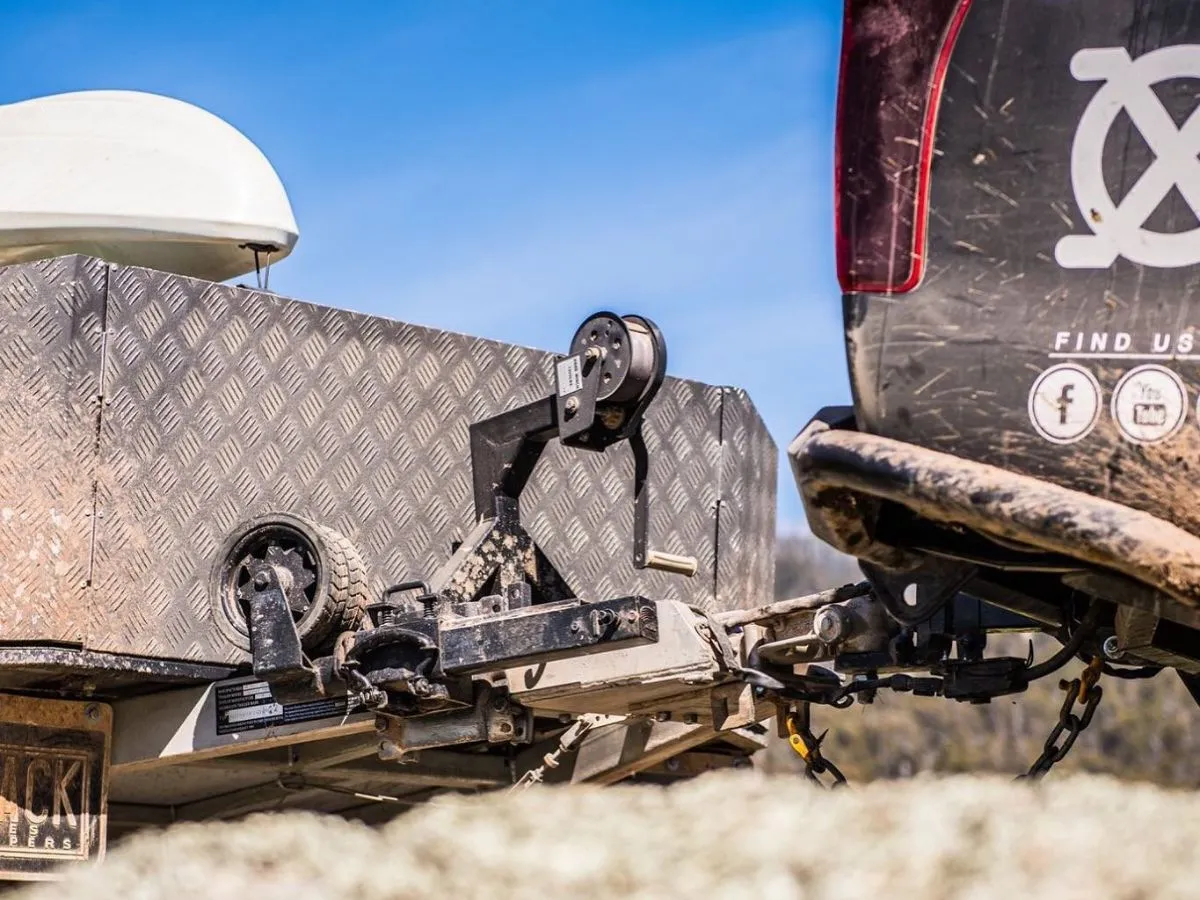
In Australia, trailers over 750kg GTM generally need a braking system.
The Australian Government’s Vehicle Standards Bulletin 1 sets out these general requirements:
| Trailer GTM | General braking requirement |
|---|---|
| 750kg GTM or under | Brakes are not required |
| Over 750kg to 2,000kg GTM | An efficient service braking system is required; brakes may be fitted to one axle |
| Over 2,000kg GTM | Brakes must operate on all wheels and an emergency breakaway braking system is required |
Understanding the 750kg Rule
Once your trailer exceeds 750kg GTM, a braking system is generally required, but that doesn’t mean the brakes must be electric.
Override (sometimes known as over-run) brakes may be used on trailers up to 2,000kg GTM. For braking systems other than override brakes, the brakes need to be activated by a control signal from the tow vehicle.
These requirements are based on GTM (Gross Trailer Mass), rather than ATM. GTM is the maximum permitted weight carried through the trailer’s tyres when fully loaded and coupled to the tow vehicle. ATM also includes the weight transferred through the coupling to the tow vehicle.
The braking section of the current VSB1 is under review, and requirements can vary between states and territories. Be sure to check the latest advice from your local road authority to make sure your setup is compliant before towing.
When Do You Need a Breakaway System?
Trailers over 2,000kg GTM generally require an emergency braking system, commonly called a breakaway system.
What a breakaway system does
The job of a breakaway system is different from the everyday brake controller. If the trailer separates from the tow vehicle, the breakaway system must immediately apply the trailer brakes.
Under the current VSB1 guidance, those brakes must remain applied for at least 15 minutes.
A typical electric breakaway setup uses its own battery and a switch connected to the tow vehicle. If the trailer and vehicle separate, the switch activates the trailer brakes using the breakaway battery. If you’re reviewing the whole front end of your trailer, our guide to choosing a trailer coupling covers what else to check at the drawbar.
ARK Electric Break-Away Kit
ARK’s Electric Break-Away Kit is suitable for two- and four-wheel brake systems. It includes a 5Ah battery, built-in battery charger, LED battery-charge indicators and a breakaway switch.
Because a breakaway system is an emergency safety device, correct installation and ongoing maintenance are important. Follow the product instructions and the requirements that apply in your state or territory.
What Does a Brake Controller Actually Do?
A brake controller manages the electrical signal sent from the tow vehicle to compatible trailer brakes.
Sending the braking signal
Without that control signal, standard electric drum brakes cannot operate as intended when you brake the tow vehicle.
If your trailer uses conventional electric brakes, you’ll need a compatible brake controller to send that braking signal from the tow vehicle.
The controller also lets the braking effort be matched to the trailer. Depending on the controller, the driver may have access to manual trailer-brake activation and adjustments to braking output.
This can be particularly useful when your setup changes. A lightly loaded trailer and a fully loaded caravan can place very different demands on the tow vehicle, even if both use electric trailer brakes.
ARK’s Electric Brake Controllers
ARK offers two electric brake controllers to suit different trailer setups.
The X8 Electric Brake Controller with Digital Display supports trailers with 2, 4, 6 or 8 brakes. Its compact design requires no levelling and includes reverse-wire protection and diagnostic error codes.
The X8 also works with electric-over-hydraulic braking systems and is designed not to interfere with vehicle systems such as ABS or cruise control.
For smaller setups, the X4 Electric Brake Controller with LED Indicator supports trailers with 2 to 6 brakes. It offers adjustable braking output and ramp time, along with reverse-wire protection and self-diagnostics.
How Do You Match a Brake Controller to Your Trailer?
The right electric brake controller needs to be compatible with your braking system and the number of brakes fitted to your trailer.
Start with the braking system you already have
Before buying a controller, confirm:
- whether the trailer uses electric drum, hydraulic, electric-over-hydraulic or another braking system
- how many wheels are braked
- the trailer’s GTM and relevant legal requirements
- the controller’s stated brake capacity and system compatibility
- the tow vehicle’s wiring and connection requirements
- whether a breakaway system is required and correctly installed.
Check the fitment as well
Fitment also needs to be checked carefully. Brake controllers form part of the tow vehicle and trailer braking system, so wiring should follow the product instructions and applicable vehicle and trailer requirements.
If you’re modifying an existing setup, changing the type of brakes or building a new trailer, have the complete combination checked by a suitably qualified professional.
Built for Aussie Conditions: ARK Brake Kits, Controllers and Breakaway Systems
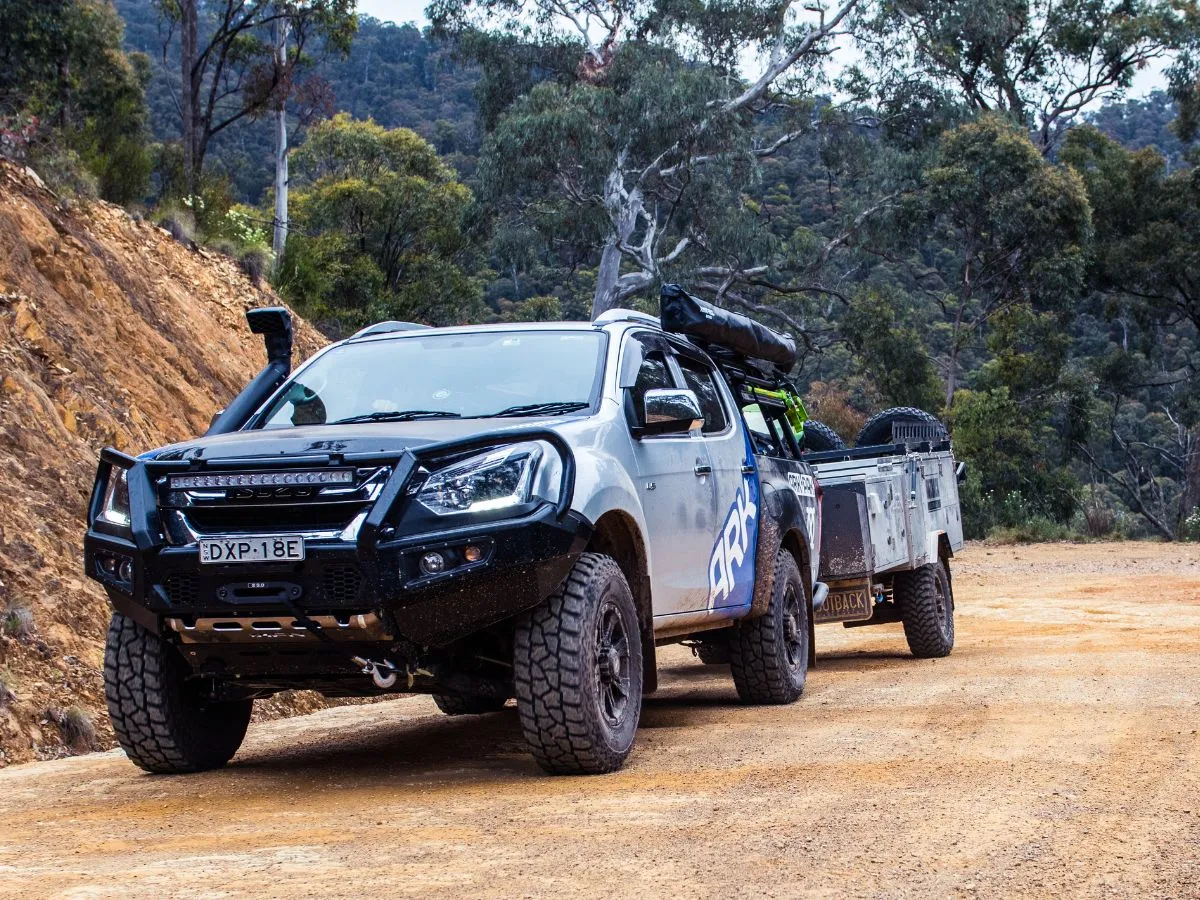
ARK’s brake range covers the key components across a range of trailer braking setups, including electric drum brakes, brake controllers, breakaway systems and supporting brake parts.
Braking gear for different setups
For electric braking, the range includes 10-inch Electric Drum Brake Kits for single-axle retrofits, along with XO Series Off-Road Electric Brakes in 10- and 12-inch sizes.
The XO range is designed with tougher trips in mind, with features such as waterproof electrical connections and reinforced components for off-road conditions.
ARK also offers electric brake controllers and breakaway systems to complete the setup, whether you’re upgrading an existing trailer or putting together a new build.
More than 45 years of towing innovation
ARK has been part of Australia’s trailer, towing and 4WD industry for more than 45 years and remains 100% Australian-owned and independent.
Since starting with tow balls in 1978, ARK has continued to innovate and expand its range across towing, trailers, camping and 4WDing, developing products with Australian conditions and real-world use in mind.
Whether your rig spends its time between home and the boat ramp or takes on corrugated tracks to your camp, the same principles apply: know your braking setup, choose compatible components and keep everything properly maintained and compliant.
Frequently Asked Questions About Electric Trailer Brakes
How do electric brakes on a trailer work?
Electric drum brakes use an electromagnet inside the brake assembly. When the brake controller sends a signal to the brakes, the magnet helps bring the brake shoes into contact with the drum, creating friction that slows the trailer.
At what weight does a trailer need electric brakes in Australia?
Trailers over 750kg GTM generally need a braking system, but it does not have to be electric. Override brakes can also be used on trailers up to 2,000kg GTM. Check the current requirements in your state or territory.
Can I pull a trailer with electric brakes without a brake controller?
If the trailer uses conventional electric brakes that rely on a tow-vehicle control signal, you need a compatible brake controller for those brakes to operate as intended. Don’t assume the trailer is correctly braked simply because electric brake assemblies are fitted.
What does a brake controller do?
A brake controller sends and manages the electrical signal used to activate compatible trailer brakes. It allows the trailer to contribute braking force when the tow vehicle slows and, depending on the controller, may let the driver adjust output or manually activate the trailer brakes.
How do I know what type of brakes are on my trailer?
Start by looking at the brake assemblies and the components around the coupling, then check the trailer documentation. Electric drum brakes have wiring running to the brake assemblies, while mechanical and hydraulic systems use different actuation hardware. If you’re still unsure, have the setup identified before ordering parts.
Do I need a breakaway system on my trailer?
Under the current national VSB1 guidance, trailers over 2,000kg GTM require an emergency braking or breakaway system, and the brakes must operate on all wheels. Check your state or territory road authority for the requirements that apply to your trailer before towing.