

05 Aug 2026
Buying a jockey wheel sounds simple enough until you start looking. There’s a spread of ratings, wheel sizes, mounting styles, and price points that can turn a fifteen-minute job into an afternoon of second-guessing.
This guide cuts through all of it. You’ll learn what a jockey wheel actually does, the different types on the market, how to size one for your trailer or caravan, and when it’s time to upgrade the one you’ve got. We’ve built jockey wheels here at ARK for over 45 years, so the advice is grounded in what actually works out on the tracks, not just what looks good in a catalogue.
By the end, you’ll know exactly what to look for and why.
Answer Summary
- Match the load rating to your fully loaded trailer or caravan’s tow ball weight, with headroom for off-road use.
- Dual wheels roll better on soft ground. Single ratchet wheels give you leverage for heavier setups.
- Bolt-on mounts are the easiest DIY option. Weld-on and tube mounts suit purpose-built off-road rigs.
- Salt spray-tested finishes are non-negotiable if you camp near the coast or launch boats.
- Upgrade when you notice bending or seizing, or you’ve upgraded to a heavier rig.
What Does a Jockey Wheel Actually Do?
A jockey wheel supports the front of your trailer or caravan when it’s uncoupled from your vehicle, and lets you manoeuvre it into position by hand.
That’s the short version. In practice, it’s doing a lot more than just holding things up. A good jockey wheel keeps your setup level while you’re hitching, gives you the leverage to move a loaded trailer into a tight campsite, and takes the weight off your drawbar so nothing bends or fatigues over time.
The wrong jockey wheel is one of those things you notice fast. A wheel that seizes on soft ground, bends under load, or won’t crank high enough to level your rig becomes a genuine problem in the middle of nowhere. The right one just does its job quietly and lasts for years.
The Different Types of Jockey Wheel
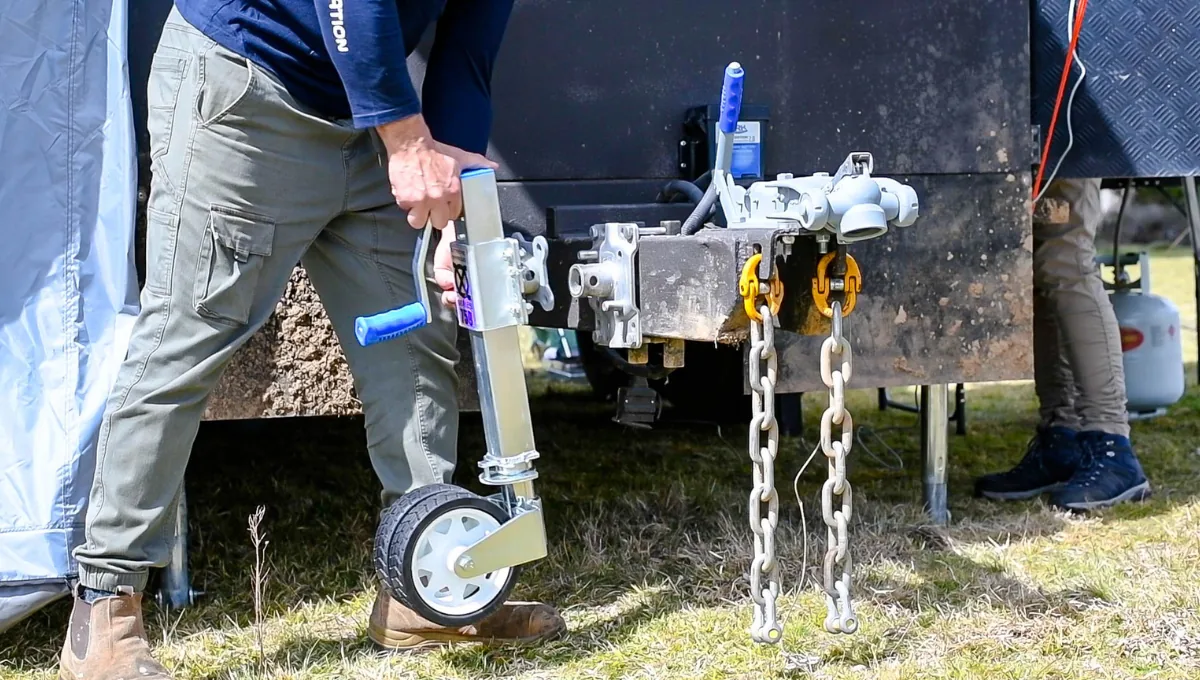
Jockey wheels come in five main styles, and each one suits a different kind of setup.
Standard Jockey Wheel
Your everyday wheel, usually rated between 100kg and 250kg. Suits small trailers, box trailers and light-duty applications. Fine for sealed roads and gentle use, but not built for off-road punishment.
Heavy Duty Jockey Wheel
Rated higher (typically 350kg and above), with a stronger body and larger wheel for tougher use. Better suited to camper trailers, boat trailers and larger utility trailers that spend time on unsealed roads.
Ratchet Jockey Wheel
Uses an extended ratchet arm instead of a wind handle, so you can move heavy trailers with less effort. Ideal for anyone dealing with a big single-axle or tandem-axle setup, or where you need to steer and move at the same time. ARK’s XO350R Ratchet Jockey Wheel is a good example, with a 350kg rating and four functions (forward, reverse, neutral, stop/lock) all in one arm.
Swivel Bracket Jockey Wheel
Uses a swivel-mounted clamp that lets the wheel flip up out of the way when you’re towing. Common on off-road trailers and campers where ground clearance matters.
Swing Up Jockey Wheel
Similar to swivel bracket, but with a hinged design that folds the wheel up and back for travel. Reduces the risk of damage when you’re pushing through rough terrain or crossing washouts.
Most modern off-road setups use some combination of heavy duty, swivel bracket and swing up features. ARK’s XO Series covers this ground with several variants depending on your rig.
What Size Jockey Wheel Do You Need?
The size of your jockey wheel needs to match the tow ball weight of your fully loaded trailer or caravan, with a buffer for off-road conditions.
Here’s the general rule. Look at your trailer’s ATM (Aggregate Trailer Mass) and calculate 10 percent. That’s roughly your tow ball weight, which is the minimum load your wheel needs to support. Most Australian sources put the safe range at 8 to 12 percent of ATM, with 10 being the golden number for stable towing. Just note that Australian tow ball weight is capped at 350kg for most vehicles (or the manufacturer’s specified limit, whichever is lower).
Then add headroom. If you tow off-road, corrugations and impact loads briefly multiply the weight on the jockey wheel, so a wheel rated well above your static tow ball weight will last longer and stay level. That’s why serious off-road caravans often run 750kg rated wheels even when their static tow ball weight is well under 350kg.
As a rough guide:
| Trailer type (ATM) | Jockey wheel rating | ARK pick |
|---|---|---|
| Small box or utility trailer (up to 1,500kg) | 150 to 250kg | Standard range |
| Camper trailer or boat trailer (1,500 to 2,500kg) | 350kg | XO350 |
| Off-road caravan or heavy-duty camper (2,500kg+) | 750kg | XO750 or XO750 XL |
If you’re heading off-road with a caravan, don’t skimp here. A cheap wheel bending under load in the middle of a corrugated track is a bad day out.
Wheel Size and Tyre Type: What to Look For
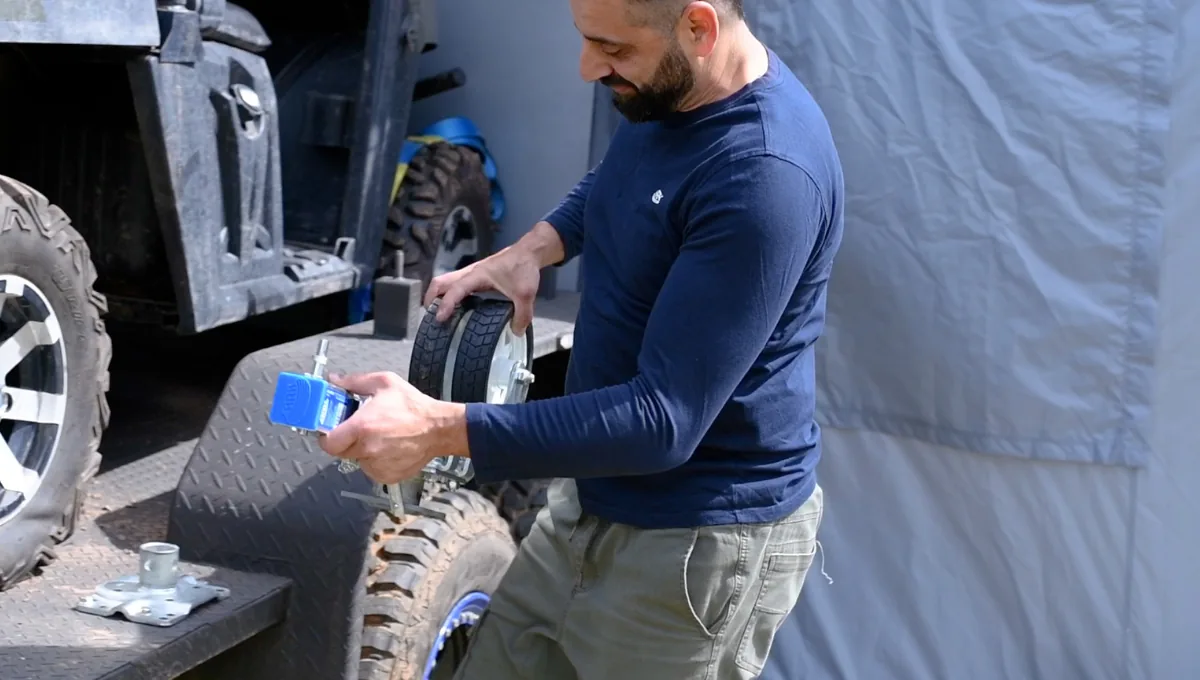
The wheel itself matters more than most people think. Bigger wheels roll over rough ground more easily, and better tyres make a huge difference on sand, mud or gravel.
Wheel size. Standard models come with wheels around 6 inches, while heavy-duty options step up to 8 or 10 inches. The XO350 uses dual 6-inch wheels, the XO750 comes with dual 8-inch wheels, and the XO350R Ratchet runs a single 10-inch solid rubber wheel for maximum leverage on tough surfaces.
Single vs dual wheels. Dual wheels spread the load and give you better grip on soft ground. Single wheels take up less space and work well with ratchet-style systems where leverage matters more than surface area.
Tyre type. Solid rubber wheels handle rough Aussie conditions better than pneumatic tyres, which can go flat at the worst possible moment. Look for off-road tread patterns if you spend any time on unsealed roads. Sealed bearings are another must-have if you camp near the coast or the wheel spends time in mud or dust.
Mounting Styles: Bolt-On, Weld-On, Tube Mount and Swing Up
The way your jockey wheel mounts to your drawbar affects how easy it is to install, how strong the mount is, and whether you can swap it out later.
Bolt-On Clamp
The most common style. A clamp fits around your drawbar and bolts through, no welding required. Great for DIY installs. The ARK XO Series ships with mounting hardware, with the XO350 and XO750 both suiting 75mm, 100mm, 130mm and 150mm drawbars (the XO350 range also fits 50mm).
Weld-On Bracket
Permanent, purpose-built. Common on manufacturer-built trailers where the bracket is welded in during construction. Very strong, but not easy to swap out later.
Tube Mount
A tube welded to your drawbar receives the wheel shaft. The XO750T Tube Mount version is designed to fit most existing tube mounts on the market, so if your trailer already has one welded on, you can swap up to a heavier duty XO wheel without changing brackets.
Swing Up Mount
Uses a hinged or swivel design so the wheel folds up and out of the way for travel. Best for off-road trailers where ground clearance matters.
Whichever style suits your setup, look for a mount with a wide pivot base (four-bolt pivot points are standard on the XO range) to stop the whole assembly from bowing under weight.
How to Choose the Right Jockey Wheel for Your Rig
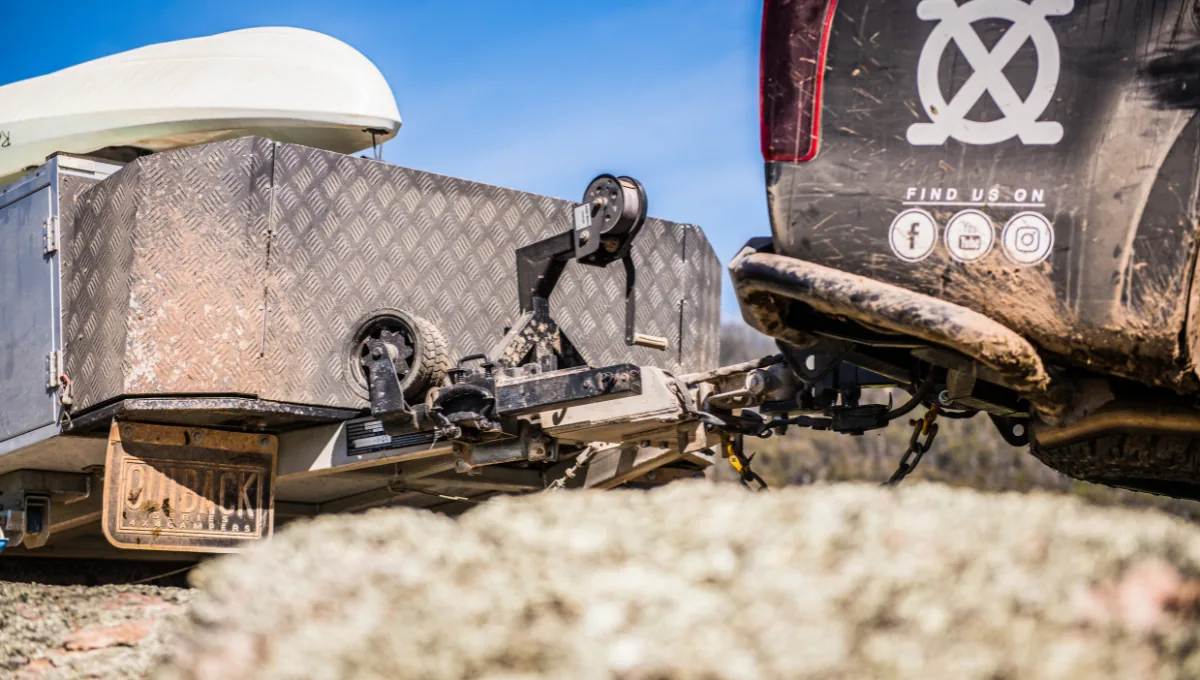
Choosing the right jockey wheel comes down to three things: load rating, terrain, and mounting compatibility.
Start With the Load
Add up the fully loaded weight of your trailer or caravan, work out the tow ball weight, and add a buffer for off-road use. If you’re between two ratings, go up, not down.
Match the Wheel to the Terrain
If you never leave the bitumen, a standard heavy-duty wheel is fine. If you’re heading off-road, dual off-road wheels with sealed bearings and salt spray-tested finishes are non-negotiable. Coastal use adds another reason to prioritise corrosion resistance.
Check Your Drawbar
Measure the width of your drawbar before you buy. Most bolt-on options suit a range of sizes, but if you’ve got a non-standard drawbar or an existing tube mount, check compatibility first.
Think About Ease of Use
A magnetic removable handle stops the winder banging around when you’re driving. A ratchet system saves your back when you’re moving a heavy rig. Multiple height positions matter more when you’re setting up on uneven ground.
The best jockey wheel is the one you don’t think about after you install it. Get the rating right, and it’ll last for years.
Signs It’s Time to Upgrade Your Jockey Wheel
Most jockey wheels give you plenty of warning before they fail, so it’s worth knowing what to look for.
The body is bending or bowing. If the main body has visible flex under load, or the mount plate is showing signs of bowing, you’ve outgrown the current rating. Time to upgrade.
The wheel is seizing or won’t spin freely. Usually a sign of failed bearings or corrosion. If it’s still under warranty, look at replacement parts. Otherwise, it’s a good excuse to move up to a sealed bearing dual-wheel setup.
Rust is winning. Surface rust is normal on older gear, but if the finish is peeling or the mount is pitted, the structural integrity is going with it.
You’ve upgraded your rig. Bought a bigger caravan? Added a rooftop tent, extra water tanks or a heavier canopy? Your load has changed, and your wheel needs to keep up.
You’ve bent the handle. Twice. A magnetic removable handle solves this for good.
Upgrading is one of the better upgrades you can make to a tow rig, because you use it every single time you set up and pack down. A wheel that works properly makes every trip smoother.
The ARK XO Series and Heavy Duty Range
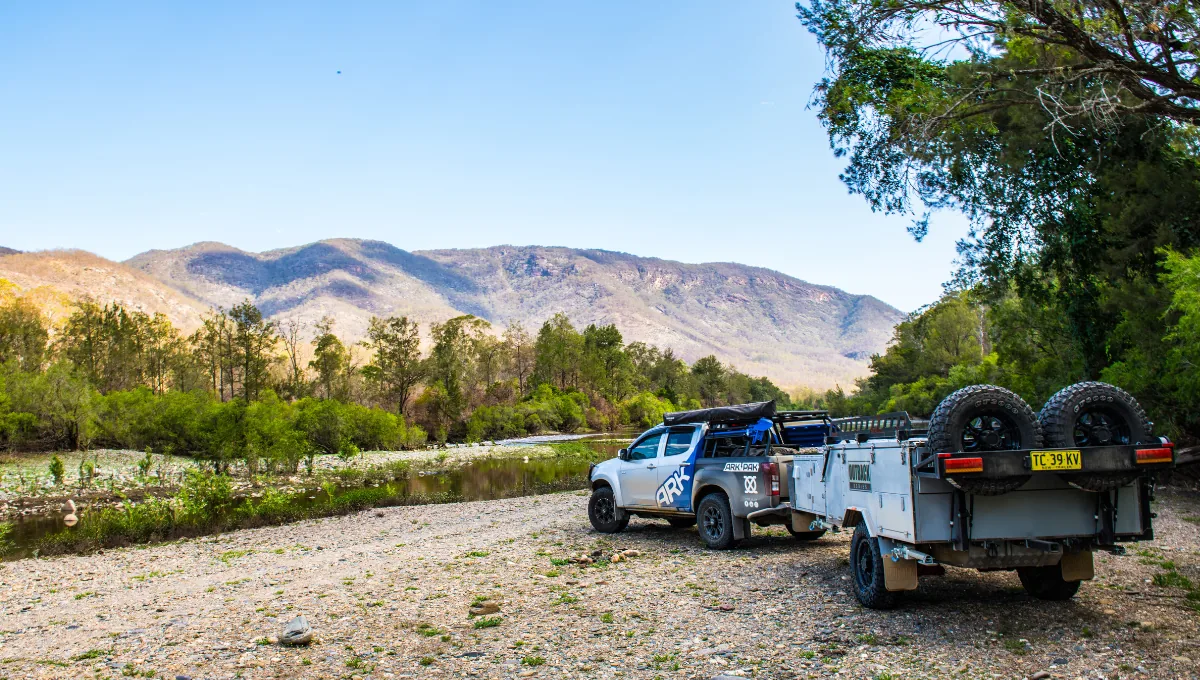
The XO Series is ARK’s Extreme Off-road range, built for the trailers and caravans that spend real time off the bitumen. It’s the standard a lot of Australian camper trailer and caravan manufacturers now use straight from the factory.
XO350 350kg rated. Dual 6-inch wheels with sealed bearings and off-road tread. Three height positions. Suits smaller off-road trailers, boat trailers and ATVs.
XO350R Ratchet 350kg rated. Single 10-inch solid rubber wheel with a four-function ratchet system (forward, reverse, neutral, stop/lock). Extended ratchet arm for easy manoeuvring of heavier trailers.
XO750 750kg rated. Dual 8-inch premium wheels with sealed bearings. Four height positions with 250mm adjustability each. Five yoke locking positions. Suits drawbars from 75mm to 150mm. The workhorse of the range.
XO750 XL 750kg rated with extended body length. Minimum height 295mm, maximum height 850mm. For trailers with extra frame clearance or lift.
XO750B 750kg rated. Shares the XO750’s core spec, including dual 8-inch wheels and four height positions with 250mm adjustability.
XO750T Tube Mount 750kg rated with a reinforced tube mount bracket. Completely removable and compatible with most existing tube mounts on the market.
Every wheel in the XO range shares the same core features. Heavy duty body, four-bolt pivot swivel clamp, magnetic removable side-winding handle, and a rust-resistant finish that’s been salt spray-tested for 600 hours.
If you’re building a rig you plan to keep for the long haul, the XO Series is the range designed to keep up with you.
Ready to upgrade?
Every ARK jockey wheel is designed and engineered in Australia, tested against the conditions you actually tow in. Whether you’re building your first camper trailer or replacing a wheel on a serious touring rig, there’s an XO Series option built to keep up.
Browse the full range online, or find your local ARK stockist to see them in person.
Jockey Wheel FAQs
What size jockey wheel do I need for a caravan?
For most standard caravans, a 350kg rated jockey wheel will handle the tow ball weight. For heavier or off-road caravans (2,500kg+ ATM), step up to a 750kg rated wheel like the XO750 or XO750 XL. Always check your caravan’s tow ball weight and add a buffer for off-road use.
How do I choose the right jockey wheel for my trailer?
Match the load rating to your fully loaded trailer’s tow ball weight, choose a wheel size and mount that suit your terrain, and make sure the drawbar dimensions are compatible. If in doubt, go one rating higher.
Are all caravan jockey wheels the same?
No. Jockey wheels vary by load rating, wheel size, mounting style and corrosion resistance. A wheel built for a suburban box trailer won’t hold up on a corrugated outback track, and one designed for coastal use will outlast a cheaper option in salty conditions.
Is it worth upgrading jockey wheels?
Yes, if the current one is bending, seizing, rusting, or under-rated for your rig. It’s one of the most-used bits of kit on your setup, so a proper one saves time, effort and future repair costs.
What is the best jockey wheel for a caravan?
For off-road caravans, the ARK XO750 or XO750 XL are the picks. Both are 750kg rated with dual off-road wheels, sealed bearings and salt spray-tested finishes designed for Australian conditions.