

22 Oct 2026
Buying trailer wheels, axles or hubs sounds simple enough until you realise how many measurements have to agree with each other before anything bolts on. Stud patterns, rim diameters, axle stub sizes and bearing numbers all play a part, so if you are working from memory in a parts aisle it is easy to come home with the wrong one.
Running gear also tends to be the part of a trailer that gets the least attention while doing some of the hardest work. A wheel that is under-rated for the load you carry or a hub that does not quite suit your axle will usually let you know about it a long way from home.
This guide walks you through how to identify what is already on your trailer, how to read the sizes and ratings on the parts and what to check before you order a replacement. We have been making trailer parts here at ARK since 1978, so it is ground we know well.
Answer Summary
- Start with the stud pattern. Count the studs, then measure the circle their centres sit on. Written as studs x diameter, this decides which wheels and hubs will bolt on.
- Read a wheel as three numbers. The rim diameter, the tyre size and the load rating per wheel all need to suit your trailer, with all three printed on the parts you already have.
- The lowest rating in the chain sets your limit. Wheels, tyres, axle and hubs each carry their own rating, so the smallest of them is what the trailer can safely carry.
- Match the hub to the axle as well as the wheel. Hubs are chosen on bearing size and stud pattern first, then on whether the trailer is braked.
- Check the bearings while the wheel is off. Rumbling, wobble or a hot hub after a drive usually means the bearings need attention.
How Do You Work Out Which Wheels Fit Your Trailer?
Trailer wheels fit when four things line up: the stud pattern, the rim diameter, the load rating and the offset. Once those four are right, the wheel should bolt on and sit square against the hub face without any drama.
The easiest way to find all four is to read what is already on the trailer. You can measure the stud pattern off the hub, the rim and tyre sizes are printed on the tyre sidewall and the load rating is usually on a sticker or stamped into the rim itself.
Offset matters less on a trailer than it does on a car, because most trailer rims are a zero offset design. ARK’s trailer wheels are all 0mm offset Sunraysia style rims that come with the tyre already fitted, so if your trailer happens to run something different it is worth measuring before you order.
Trailer Wheel Sizes and Load Ratings Explained
Trailer wheel sizes are quoted as the rim diameter in inches, while the load rating tells you how much weight each wheel is designed to carry. Most Australian trailers run 13, 14 or 15 inch rims, with 10 inch rims usually reserved for small box and utility trailers.
Reading Rim and Tyre Sizes
The rim and the tyre are matched as a pair, which is why you will normally see them quoted together. The table below shows the combinations in ARK’s galvanised range and where each one tends to be used.
| Rim size | Tyre size | Load rating per wheel | Typical use |
|---|---|---|---|
| 10 inch | 5.00 x 10 | 437kg | Box and utility trailers |
| 13 inch | 155R13C or 165R13C | 515kg or 670kg | Box trailers and light campers |
| 14 inch | 185R14C | 850kg | Camper trailers and boat trailers |
| 15 inch | LT235/75R15 | 900kg | Heavier campers and boat trailers |
A bigger rim is not automatically the better choice. Larger diameters do roll over corrugations more comfortably, though they also lift the deck height and can eat into your guard clearance.
Galvanised rims generally handle salt water and coastal air better than painted ones, which is why you see them on most boat trailers. If your trailer lives on the road and at camp, painted rims will do the job just fine.
How Load Ratings Stack Up Across the Wheel, Axle and Hub
Every part in the running gear carries its own rating, so the lowest one is the number that counts. Four 850kg wheels might add up to 3,400kg of wheel capacity, though if there is a 1,500kg axle underneath then 1,500kg is what your trailer can carry.
Work from the loaded weight of the trailer rather than what it weighs empty, because water, tools, batteries and recovery gear all add up faster than you would expect once they are on board.
It is also worth leaving yourself some headroom rather than sitting right on the limit. Corrugations briefly multiply the load going through each wheel and hub, so running gear with a bit of margin in it generally lasts longer.
What Is a Stud Pattern (PCD) and How Do You Measure Yours?
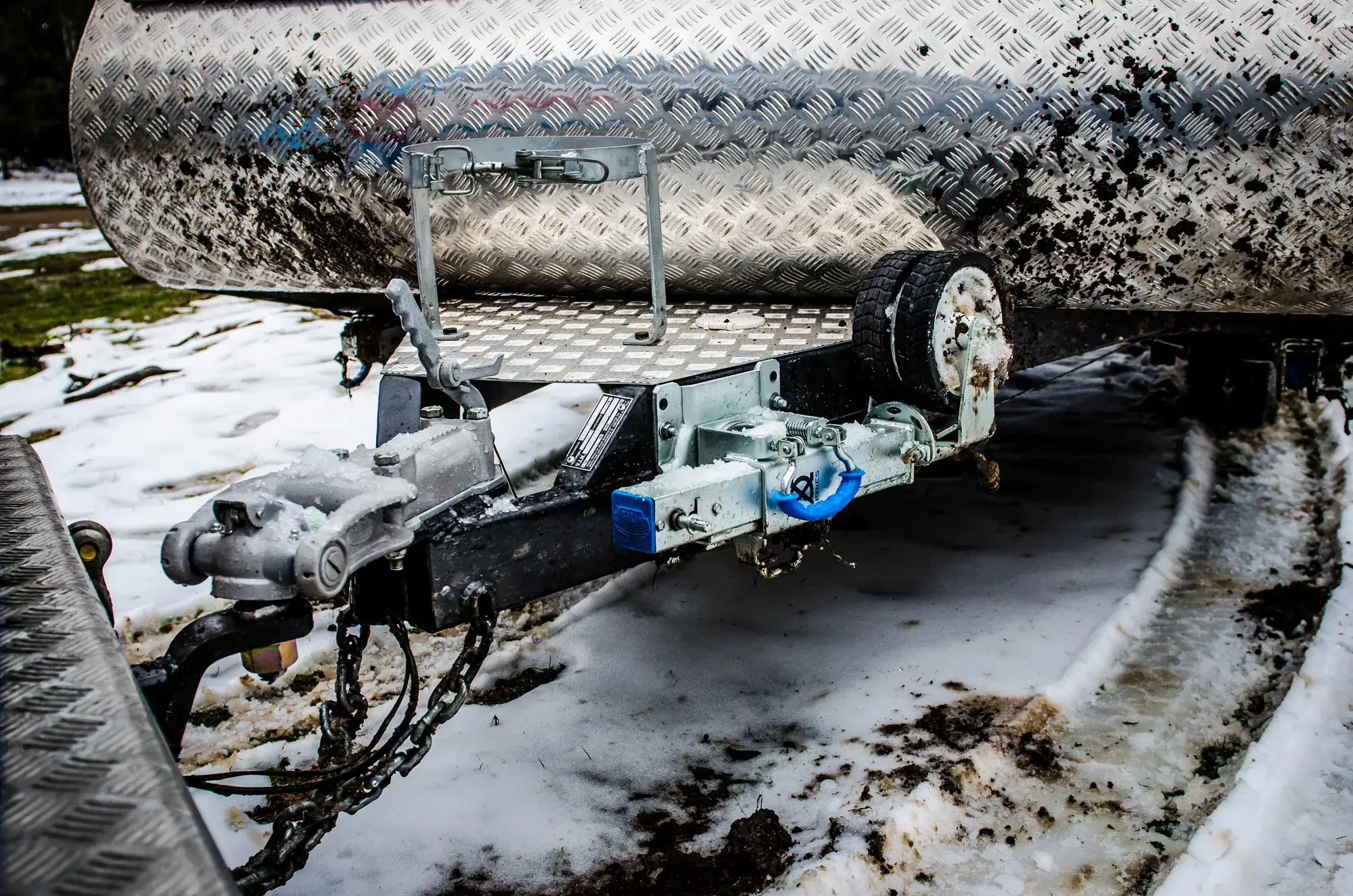
A trailer stud pattern is the number of studs on the hub combined with the diameter of the circle their centres sit on, which is written as studs x diameter. A Ford pattern, for example, reads 5 x 114.3mm, with the PCD part standing for pitch circle diameter.
This is the figure that decides whether a wheel or a hub will bolt onto your trailer at all. Everything else about the part can be right and it still will not fit if the pattern is out by a few millimetres.
How to Measure Your Stud Pattern
Count the studs before you pick up the tape, because the number you land on changes how you measure.
- Even stud counts (4, 6 or 8 studs). Measure from the centre of one stud straight across to the centre of the stud directly opposite it, which gives you your PCD.
- Odd stud counts (5 studs). With five studs there is nothing sitting directly opposite, so measure from the centre of one stud to the outer edge of the stud roughly across from it, which gives you a close approximation.
- Check your reading either way. If your measurement lands between two known patterns, a PCD gauge or a template from your parts supplier will settle it.
There is only about six millimetres between a 5 x 108mm pattern and a 5 x 114.3mm one, so measure off a clean hub face and take the reading twice before you commit to anything.
The Common Australian Stud Patterns
Four patterns cover most of the trailers you will see on Australian roads, so they are listed below along with where each one usually turns up.
| Pattern name | Studs x PCD | Where you usually see it |
|---|---|---|
| Ford | 5 x 114.3mm | Box trailers, camper trailers and boat trailers. The most common trailer bolt pattern in Australia |
| Holden HT | 5 x 108mm | Older Holden pattern trailers and hubs |
| Holden HQ | 5 x 120.65mm | Later Holden pattern trailers and hubs |
| Landcruiser | 6 x 139.7mm | Heavier single and tandem axle trailers and larger boat trailers |
The main thing to take away is that five stud wheels are not all the same pattern. Ford, Holden HT and Holden HQ each run five studs on a slightly different circle and look near enough to identical at a glance, which is why measuring is the only reliable way to tell them apart.
Some rims are made as multi-fit, with slotted or extra holes so that one rim can suit more than one pattern, which is why ARK’s galvanised trailer wheels include a Ford and HT multi-fit option. Hubs are still pattern specific though, so it always pays to know your own.
How Do You Choose the Right Trailer Axle?
Choosing a trailer axle comes down to its section size and shape, its rated capacity and its length, followed by a check that your hubs and bearings suit the stub. Between them, those figures decide whether the axle will carry your load and accept the gear that is already on the trailer.
Stub Axles and Straight Beam Axles
Stub axles are short spindles that mount one on each side of the trailer, which makes them the usual choice for independent suspension and smaller builds. A straight beam axle runs the full width of the trailer as a single piece, which is the arrangement you will find under most box trailers, campers and boat trailers.
Beam axle length is chosen to suit the track width of the trailer. ARK’s axles run from 59 inches through to 97 inches in either black or galvanised finishes, while the stub axles come in lengths from 8 to 12 inches.
Replacing like for like is always the simplest path. Changing the length or the rating touches the suspension and the chassis as well as the axle, so that is a job to hand to a trailer specialist.
Axle Sizes and What They Carry
Section size is usually the quickest guide to what an axle can carry, which is why the table below lists the sizes in ARK’s range alongside the sort of trailer each one suits.
| Axle size and shape | Rated capacity | Typical use |
|---|---|---|
| 39mm round | 750kg | Light box and utility trailers |
| 40mm square | 1,000kg | Box trailers and small campers |
| 45mm square | 1,500kg | Camper trailers and boat trailers |
| 45mm square parallel | 1,750kg | Heavier campers and boat trailers |
| 50mm square | 2,000kg | Heavier campers and tandem builds |
Keep in mind that an axle rating is not the same thing as the trailer’s rated capacity, because the suspension, chassis and coupling all have a say in that figure too. Fitting a higher rated axle on its own will not lift what the trailer is allowed to carry.
How Do Hubs and Drums Match Up to Your Axle?
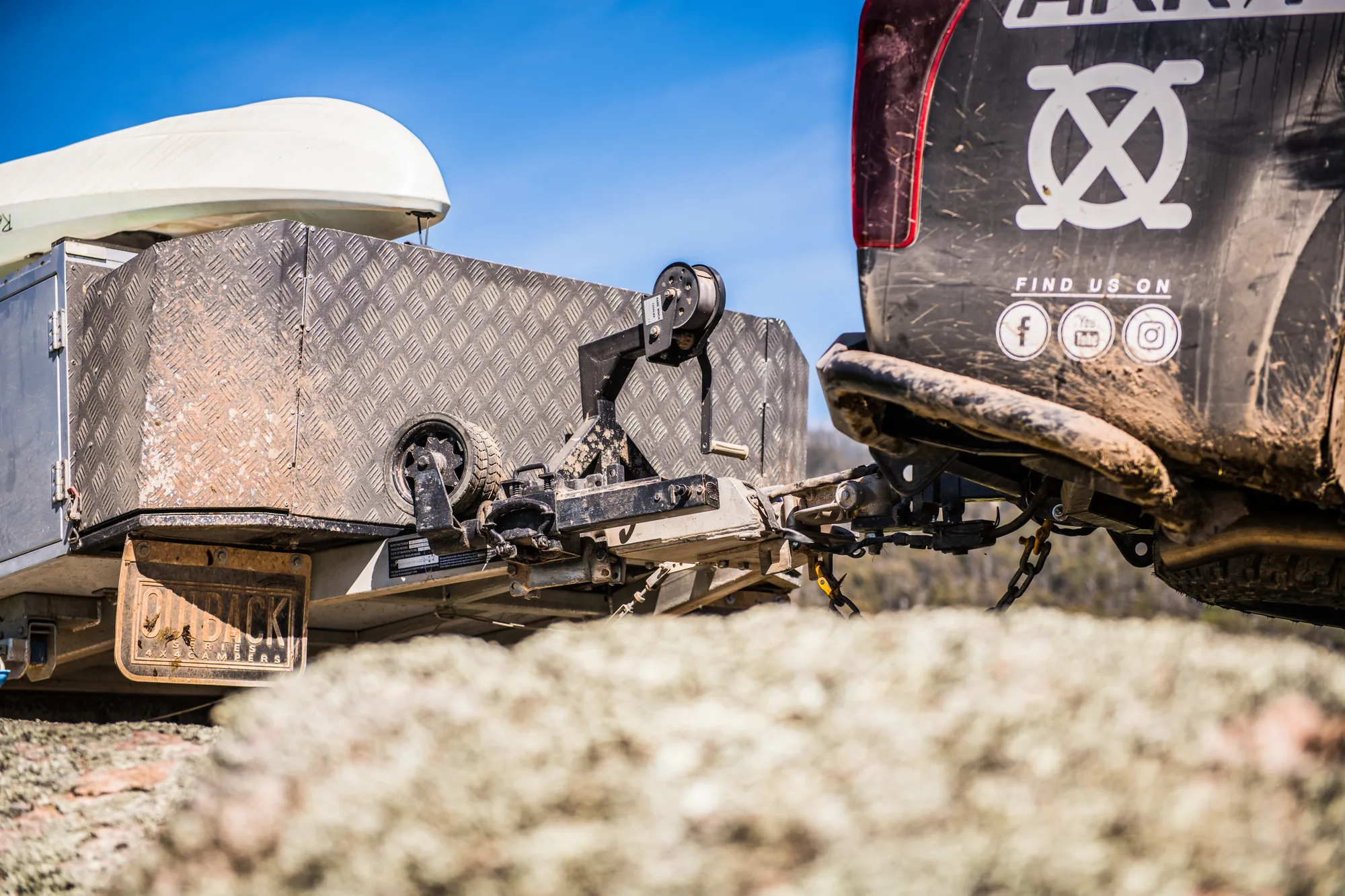
A hub suits your axle when its bearings match the axle stub and its stud pattern matches your wheels, which is why trailer hubs are sold on those two details before anything else. After that, the question is whether your trailer is braked.
Bearing size is the part that catches people out, because it is set by the axle stub rather than by the wheel bolted to the outside. ARK lists each of its hubs with the bearing it is built around, so make a note of the numbers off your old hub before you order a replacement.
Braked and Unbraked Hubs
An unbraked hub carries the wheel and nothing else. ARK sells these as studded blanks without bearings or cones, so you fit the bearings that suit your particular axle. A braked hub adds the drum or the disc rotor that the brakes act on.
In Australia, trailers over 750kg GTM generally need their own braking system, with further requirements again on heavier trailers. Which side of that line your trailer sits on decides whether you should be shopping for plain hubs or braked ones.
Drums or Disc Rotors
Hub drums and disc rotors mount the same way, so the choice between them is usually about the brake system you are running rather than the fitment. ARK’s hub drums come in a 10 inch Ford 5 x 114.3mm and a 12 inch Landcruiser 6 x 139.7mm, while the ventilated disc rotors come in the same two patterns with calipers and mounting plates to go with them.
Discs tend to shed heat and water better, which is why they suit boat trailers and heavier off-road builds, while drums are simple and well proven and remain common on general purpose trailers.
Moving from one to the other is a full brake system change rather than a straight hub swap, so it is best to have a trailer specialist look over the whole setup before you commit.
Where Wheel Bearings Fit Into All This
Wheel bearings sit inside the hub and let it spin on the axle stub, which makes them the link between the axle and the wheel bolted to the outside. Each hub takes an inner and an outer bearing along with a seal and a dust cap.
Because a hub only suits your trailer if its bearings suit your axle, it is worth writing down the bearing numbers before you order anything.
ARK’s wheel bearing kits include the small and large bearings, a seal, a dust cover and a split pin. They come in Ford or Holden options to suit 39mm round, 40mm square and 45mm square axles, with a marine version that uses a waterproof seal for trailers that spend time in the water.
Bearings tend to wear faster than the rest of the running gear, since they carry the load while spinning and sit close to water and dust. Salt water is especially hard on them, so boat trailers usually need checking more often.
The signs to watch for are a rumbling noise that changes with road speed, wobble when you rock the tyre top and bottom or a hub that feels hot after a drive.
Keen to learn more? Check out these two ARK guides:
how to choose the right wheel bearing for your trailer walks through identifying what is on your hubs, while how to change wheel bearings on a trailer takes you through the replacement step by step.
Ready to Match Up Your Running Gear?
Sorting out trailer wheels, axles and hubs is mostly a measuring job once you know what to look for. Get the stud count, the pattern, the tyre size, the bearing numbers and the loaded weight of your trailer written down and you are in good shape to order.
Everything in the ARK range is designed and engineered in Australia for the conditions you tow in, from Sunraysia style trailer wheels in painted or galvanised finishes through to axles from 39mm round to 50mm square and hubs listed with the bearing each one is built around.
If you are unsure about a rating, a fitment or a brake change, have a chat with a trailer specialist before you buy, otherwise browse the trailer parts range online or find your local ARK stockist to see the gear in person.
Trailer Wheels, Axles and Hubs FAQs

How do I know what wheels fit my trailer?
You need to match four things: the stud pattern, the rim diameter, the load rating per wheel and the offset. The pattern is measured at the hub, the sizes are printed on the tyre sidewall and the rating is usually on a sticker on the rim.
Are all 5 stud trailer wheels the same pattern?
No, they are not. Five stud wheels come in several patterns, including Ford at 5 x 114.3mm, Holden HT at 5 x 108mm and Holden HQ at 5 x 120.65mm. Because they look so similar at a glance, you need to measure the pitch circle diameter to tell a Ford pattern from a Holden one.
What is the most common trailer bolt pattern in Australia?
The Ford pattern at 5 x 114.3mm is the one you will see most often on Australian box, camper and boat trailers, while Landcruiser 6 x 139.7mm is common on heavier trailers.
What are the signs a trailer wheel bearing needs replacing?
Listen for a rumbling or humming noise that changes with road speed and check for wobble or play when you rock the tyre top and bottom. A hub that is hot after a drive is another sign. Replacing bearings early is usually far less trouble than dealing with a failure on the road.